Cosmic Dawn: The First Stars, Black Holes and Galaxies
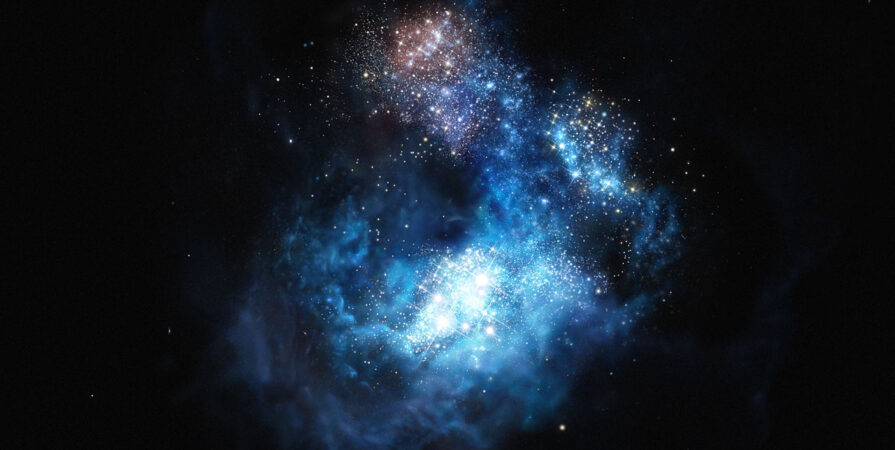
First Stars
The first stars brought light to the young Universe and began its transformation from a simple mixture of hydrogen and helium into a chemically complex cosmos. We search for the signatures of these primordial, or Population III, stars in the spectra of the earliest galaxies observed with the James Webb Space Telescope. By identifying their distinctive radiation and chemical fingerprints, we aim to understand how the first heavy elements, stellar remnants, and seeds of black holes emerged.
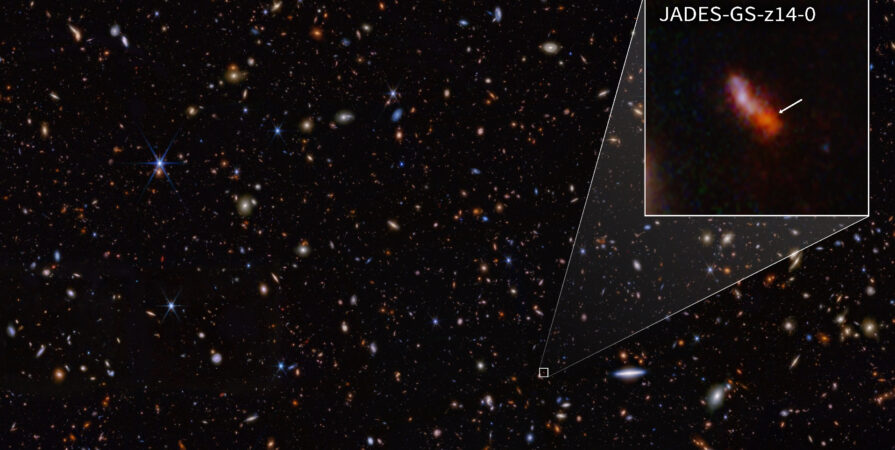
Early Galaxies
How did the first galaxies assemble so rapidly after the Big Bang? We study galaxies during the first billion years of cosmic history, measuring their star formation, gas content, chemical composition, structure, and internal motions. These extreme systems allow us to investigate how the first galaxies grew and transformed their surroundings, while testing models of cosmic structure formation and the role played by dark matter in shaping the early Universe.
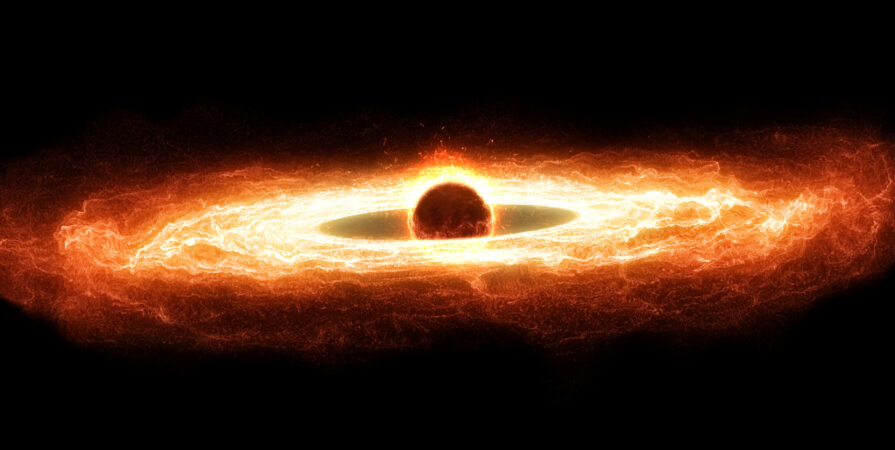
Black Holes Across Cosmic Time
Supermassive black holes power some of the brightest objects in the Universe, yet their origins and early growth remain uncertain. We investigate black holes and their host galaxies across cosmic time, from the first accreting black holes and quasars to the massive black holes found at the centres of nearby galaxies. By studying their accretion, environments, and energetic outflows, we seek to understand how black holes formed and how feedback from them influences the growth and evolution of galaxies.
Galaxy Evolution
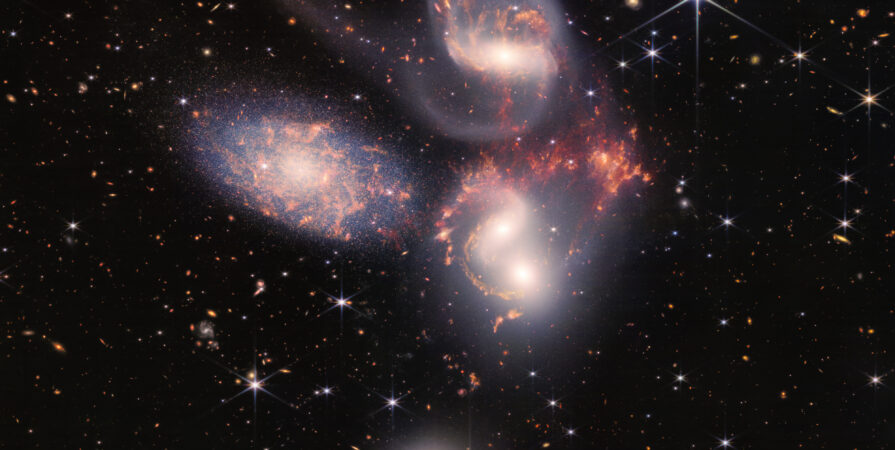
Growth and Death of Galaxies
Galaxies grow by accreting gas, forming stars, and merging with other galaxies, but their growth does not continue indefinitely. We investigate how these processes build galaxies over billions of years and why some systems eventually stop forming stars—a transformation known as quenching. By tracing galaxy populations across cosmic time, we aim to identify how gas depletion, feedback, mergers, and environment drive the transition from actively star-forming galaxies to quiescent systems.
Chemical Enrichment
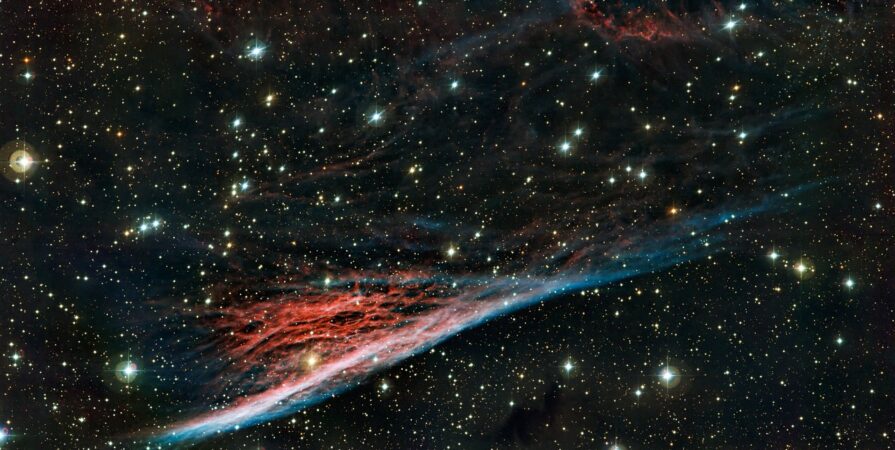
The early Universe consisted almost entirely of hydrogen and helium; nearly every heavier element was subsequently forged inside stars. Stellar winds and explosions disperse these elements into surrounding gas, where they become incorporated into new generations of stars and planets. We measure chemical abundances across cosmic time to reconstruct this cycle of enrichment and recycling, reveal how gas flows through galaxies, and understand how quickly the ingredients for planets and life emerged.
Structural Evolution of Galaxies
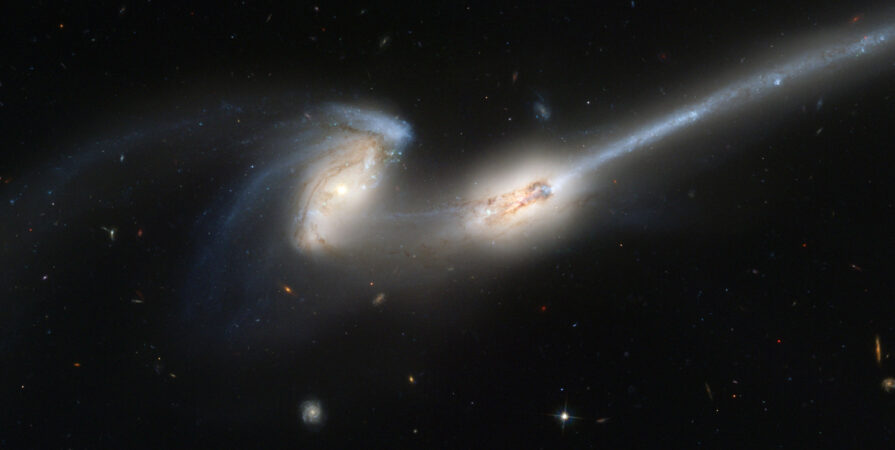
Galaxies exhibit a remarkable diversity of structures, including discs, bulges, spiral arms, bars, and compact spheroids. We combine high-resolution imaging and spectroscopy to determine how these structures emerged and changed across cosmic time, while mapping how stars and gas move within galaxies. This allows us to connect galaxy morphology and dynamics to star formation, gas accretion, mergers, feedback, and dark matter—and ultimately to understand how the complex galaxy population observed today was assembled.
Facilities and Projects
James Webb Space Telescope (JWST)
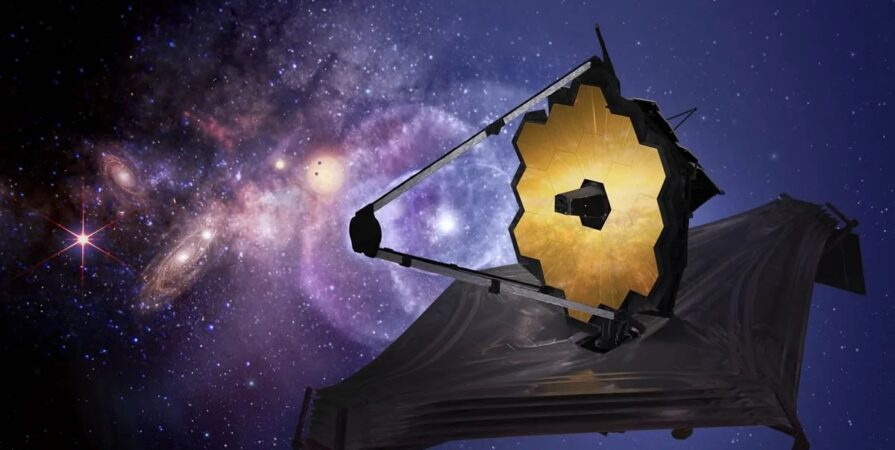
The James Webb Space Telescope (JWST) is transforming our view of the early Universe. Our group participates in several major programmes using deep imaging and spectroscopy to investigate the first galaxies, black holes, and chemical enrichment. JADES provides exceptionally deep infrared observations of galaxy formation, black hole growth, and reionization. GA-NIFS uses integral-field spectroscopy to map the gas, stars, and dynamics of distant galaxies, while BlackTHUNDER examines active supermassive black holes at (z>5) and their influence on their host galaxies. Complementing these detailed studies, LAPIS surveys more than 100 independent sightlines to search for galaxies at (z>16), within the first 250 million years after the Big Bang, and establish a census of luminous galaxies at the highest redshifts.
Very Large Telescope (VLT)
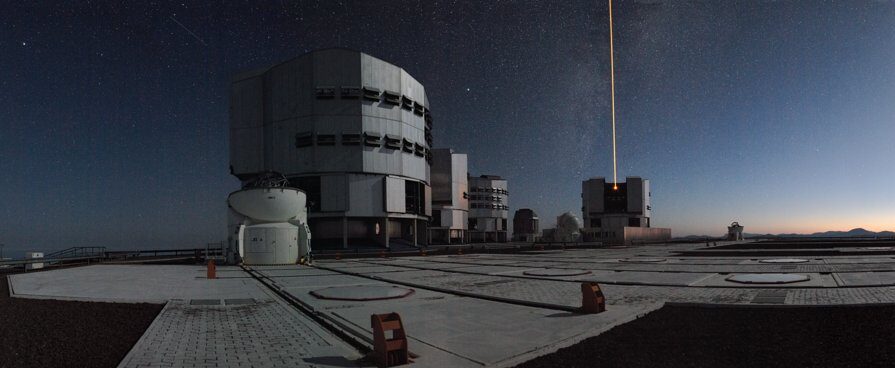
Using MOONS and X-shooter on ESO’s Very Large Telescope (VLT), we study the physical conditions, kinematics, chemical abundances, and evolution of distant galaxies. MOONS combines high multiplexing, sensitivity, and broad optical-to-near-infrared coverage to deliver Sloan Digital Sky Survey-like spectroscopy at “Cosmic Noon” (z~1–2.5). Its flagship extragalactic survey, MOONRISE, will obtain spectra for hundreds of thousands of galaxies, tracing galaxy growth, chemical enrichment, black hole activity, quenching, and environment across more than 10 billion years, including the epoch of reionization at z~6–10. X-shooter complements this statistical view with ultraviolet-to-infrared spectroscopy in a single observation, enabling detailed studies of galaxies, black holes, and the interstellar medium.
Extremely Large Telescope (ELT)
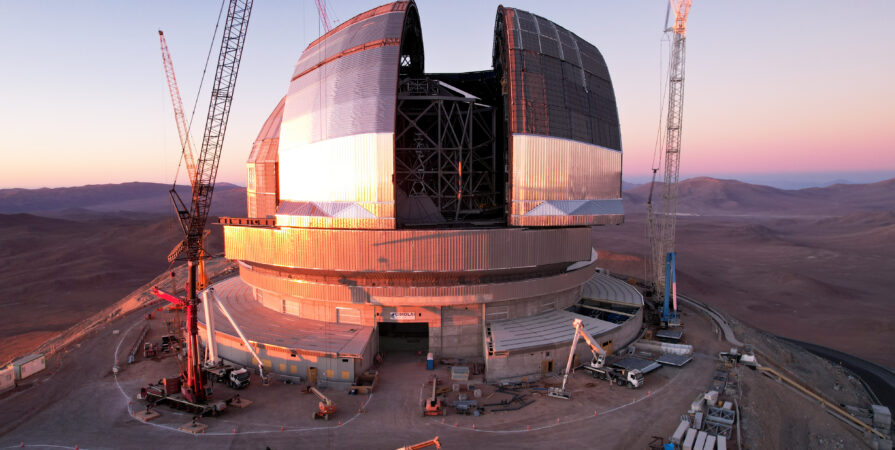
The Extremely Large Telescope (ELT) will transform our view of the Universe through its extraordinary sensitivity and spatial resolution. Our group contributes to the development of its scientific programme and instrumentation, with a particular focus on the earliest galaxies and black holes. The ArmazoNes high Dispersion Echelle Spectrograph (ANDES) will provide ultra-high-resolution spectroscopy, enabling detailed studies of the first stars, the chemical enrichment of the early Universe, and the gas within and between galaxies. Its combination of sensitivity and spectral precision will allow us to identify the chemical signatures of the first supernovae and investigate how the earliest galaxies transformed the primordial Universe.
Theory and Modelling
Numerical Simulations
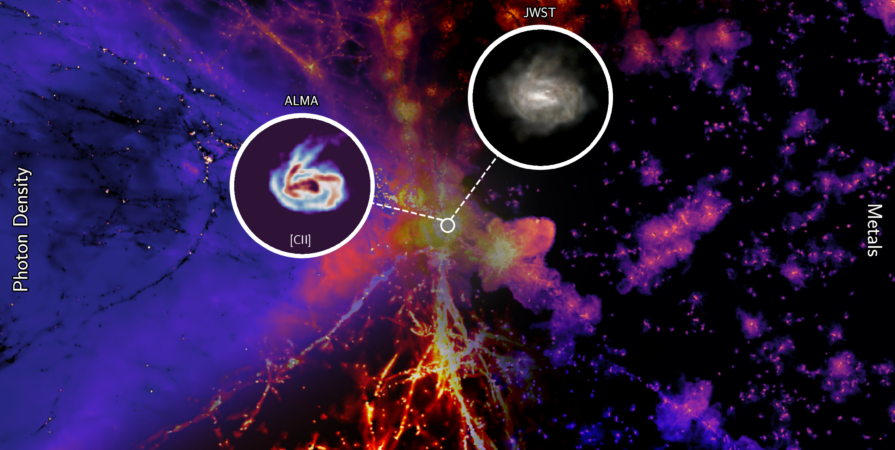
We use state-of-the-art cosmological simulations to follow the growth of dark matter haloes, gas accretion, star formation, black holes, feedback, chemical enrichment, and cosmic reionization across cosmic history. Our THESAN-ZOOM and THESAN-MULTI-ZOOM simulations model the formation of galaxies during the first billion years with exceptionally high resolution, incorporating detailed treatments of stars, radiation, gas, and dust. These simulations provide a physical framework for understanding the galaxy populations now being discovered by JWST and for connecting observations of the early Universe to the underlying processes that shaped them.
Radiative Transfer Modelling
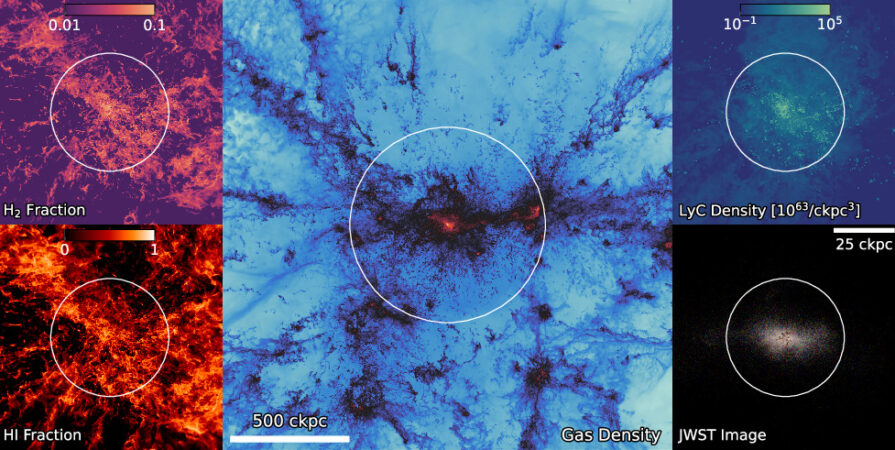
Astronomical observations capture light only after it has travelled through complex distributions of gas and dust. We use radiative transfer modelling to transform simulated galaxies into realistic synthetic images and spectra, enabling like-for-like comparisons with observations and revealing how measured properties relate to the underlying physics. Our Cosmic Lyman-alpha Transfer code (COLT) models ionized gas, nebular emission lines, continuum radiation, metal cooling, and dust within simulations such as THESAN-ZOOM. This allows us to interpret emission-line diagnostics, test observational methods, and quantify biases and selection effects.
Empirical Models
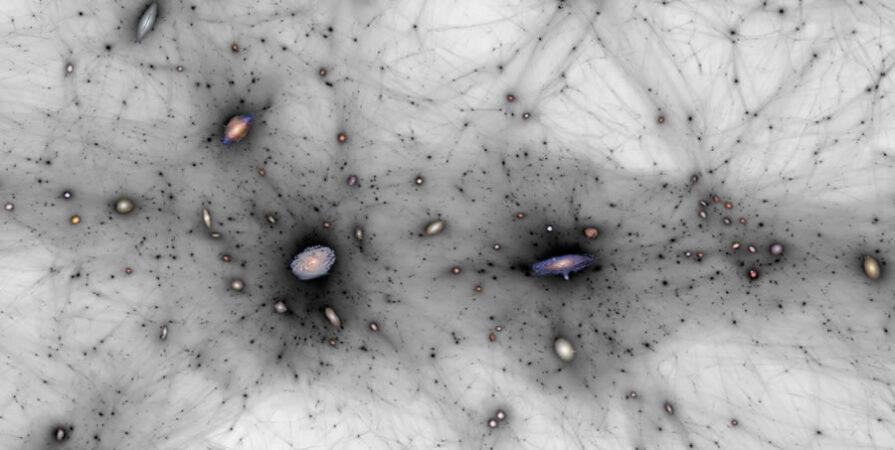
Alongside simulations, we develop flexible empirical and semi-empirical models that connect galaxies and black holes to their dark matter haloes and describe how their populations evolve across cosmic time. These computationally efficient models combine physical insight with observational constraints, allowing us to explore broad parameter spaces and test alternative scenarios for star formation, feedback, chemical enrichment, and quenching. By confronting model predictions with large datasets, we can identify the processes that most strongly shape galaxy evolution and make predictions for populations beyond the limits of current observations.